Welcome to the Marisol Light Project blog!
I'm Dr Nicola Vilaplana, a dentist with training in Photobiomodulation Therapy (PBMT)
Although my main field is orthodontics, photobiomodulation and other therapeutic applications of light have a much broader range of applications in medicine and dentistry. Through the Marisol Light Project, I dedicate part of my work to explaining this technology beyond the dental chair, bringing the science of light closer to patients and healthcare professionals.
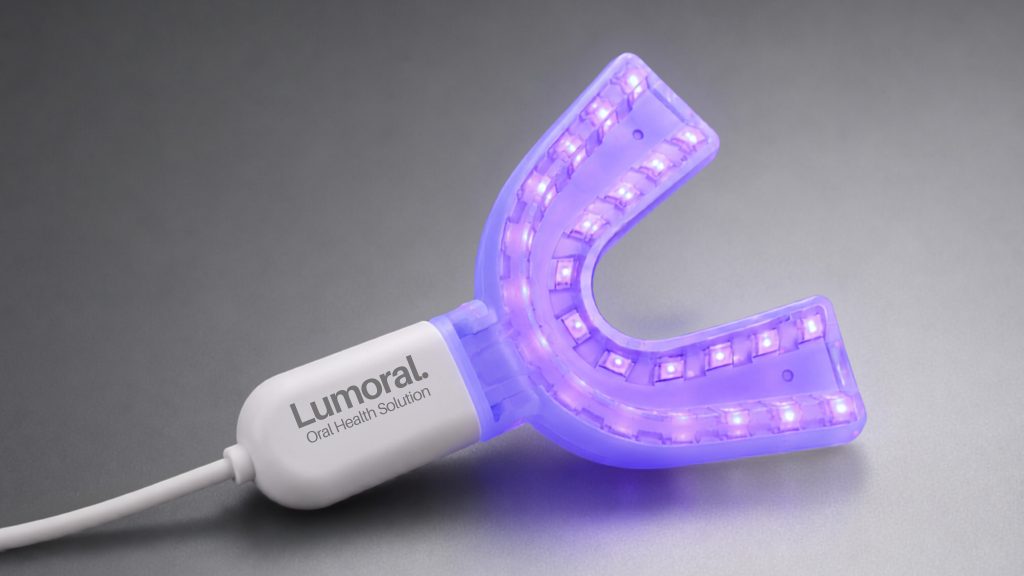
Today, I would like to share with you one of the most interesting applications I have discovered in the field of oral health: the use of light as an adjunct in the management of periodontal disease, specifically through a device called Lumoral.
The Silent Challenge: What Is Periodontal Disease?
When we think about oral health, we usually think about tooth decay or having straight teeth. However, there is another essential part of our mouths that deserves far more attention: our gums and the tissues that support our teeth.
Periodontal disease is an inflammatory condition associated with the build-up of bacteria organised into a structure known as dental biofilm. If it is not properly controlled, it can progress from early signs, such as bleeding when brushing, to the gradual loss of the bone that supports the teeth.
One of the greatest challenges is that, in its early stages, periodontal disease can progress silently and without pain. This is why regular dental check-ups are so important.
In the clinic, every day we see how important it is to maintain good periodontal health. It is not simply about having a beautiful smile but about ensuring that the tissues surrounding the teeth remain healthy, so that the teeth can remain strong throughout life.
Can Light Help Our Gums? Introducing Lumoral
Research into light-based technologies is opening up new possibilities in dentistry. Just as certain forms of light are used to support tissue healing, relieve discomfort and complement a range of dental treatments, technologies have also been developed to target the oral bacterial ecosystem.
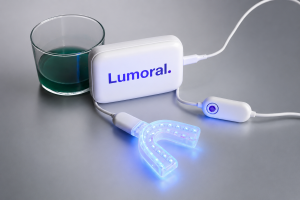
Lumoral is an intraoral device that combines antimicrobial Photodynamic Therapy (aPDT) with Photobiomodulation Therapy (PBMT). This technology uses a photosensitive substance together with two specific wavelengths of light to produce a localised effect against microorganisms associated with periodontal disease while, at the same time, supporting the body's natural tissue repair processes.
The Treatment Process in Three Steps:
- Preparation with a photosensitiser: A special solution called a photosensitiser is applied inside the mouth. It binds preferentially to certain microorganisms associated with periodontal disease.
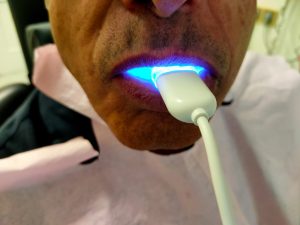
- Light activation: The patient uses the Lumoral device, which emits two specific wavelengths of light for 10 minutes.
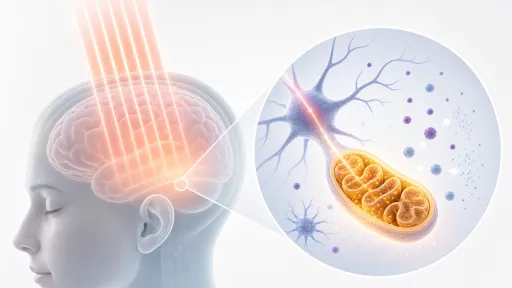
- Localised antimicrobial action and photobiomodulation: Lumoral uses two wavelengths of light that work in a complementary way. The 405 nm wavelength has a direct antibacterial effect on plaque bacteria, while the 810 nm wavelength activates the photosensitiser bound to the plaque, producing the antimicrobial effect. In addition, this same wavelength exerts a photobiomodulation (PBMT) effect on the gingival tissues.
You can think of it as a targeted treatment. The photosensitiser accumulates preferentially in the dental plaque and, when activated by light, acts primarily on the microorganisms associated with periodontal disease rather than indiscriminately eliminating all the bacteria in the mouth. Many of the bacteria naturally present in the oral cavity form part of a healthy ecosystem and play an important role in maintaining oral health.
What Does the Science Tell Us? The Evidence Behind Lumoral
As a healthcare professional, my primary interest is always the available scientific evidence. Clinical studies evaluating Lumoral have shown promising results when it is used as an adjunct to conventional periodontal treatment.
Among the observed outcomes are:
Reduction of Bacteria Associated with Periodontal Disease
Antimicrobial Photodynamic Therapy (aPDT) has been shown to reduce microorganisms associated with periodontitis, including species considered to play an important role in the progression of the disease, such as Porphyromonas gingivalis.
Improvements in Clinical Periodontal Parameters
Clinical studies evaluating Lumoral as an adjunct to conventional periodontal treatment have reported improvements in parameters including:
- Bleeding on probing.
- Gingival inflammation.
- Dental plaque indices.
- Certain parameters related to periodontal pocket depth.
A Complementary Tool in Periodontal Care
Current evidence supports the use of Lumoral as an additional tool within a comprehensive approach to periodontal health, alongside good oral hygiene, professional maintenance and periodontal treatment where necessary.
How Do We Use It in Clinical Practice? A Realistic Perspective
It is important to clarify one fundamental point: Lumoral does not replace toothbrushing, interdental cleaning, routine dental check-ups or periodontal treatment recommended by a dental professional. It is considered a complementary, or adjunctive, tool that can be incorporated into an individualised treatment plan.
In clinical practice, it may be particularly useful in situations such as:
- Patients who, despite maintaining good oral hygiene and attending regular check-ups, continue to have areas of persistent inflammation.
- As an adjunct following deep periodontal treatment to help control the bacterial biofilm.
- In patients who frequently develop tooth decay, as an adjunct to help control the bacterial biofilm.
- Patients undergoing orthodontic treatment, where maintaining good oral hygiene can be more challenging because of braces or other orthodontic appliances.
From my perspective as an orthodontist, this is particularly interesting because successful orthodontic treatment depends not only on tooth movement, but also on maintaining healthy periodontal tissues throughout treatment.
A Glimpse into the Future of Oral Health
The development of technologies such as Lumoral reflects an important trend in modern medicine: treatments that are becoming increasingly precise, selective and personalised.
The future of medicine is not simply about more intensive treatments, but about treatments that are able to act more specifically where they are needed. When used appropriately and based on sound scientific principles, light can become an additional tool to help maintain the body's natural balance.
This technology opens the door to a new era in oral healthcare, where we combine prevention, science and personalised treatments to support our patients throughout their oral health journey.
Questions for the Community
Are you surprised that light can have such specific applications within the mouth?
Do you have any questions about periodontal disease or how light-based technologies work? Leave your questions in the comments, and let's continue learning together about the fascinating science of light and its applications in healthcare.
Health Information, Medical Disclaimer and References
The Marisol Light Project aims to provide educational health information based on the best available scientific evidence. Lumoral is a medical device that should be used in accordance with the guidance of a qualified dental professional. This blog is intended for informational purposes only and does not replace professional diagnosis, treatment or the personalised advice of your dentist. If you have any symptoms or concerns about your oral health, always seek advice from a qualified healthcare professional.
Scientific reference: Pakarinen S, Välimaa H, Heikkinen AM, et al. A randomized controlled trial of home-applied dual-light photodynamic therapy during supportive periodontal care (HOPE-CP study). J Periodontol. 2026;97(6):720–731. https://doi.org/10.1002/jper.70082