

Practical PBMT Guide
Everything you need to know before starting PBMT
What to expect during a session, how home devices compare with clinical treatment, what the scientific research really says, and how to take the first step safely.
What happens during a PBMT session?
It is a modern, safe and generally comfortable treatment. Understanding what happens during a session can help you feel more confident about the process.
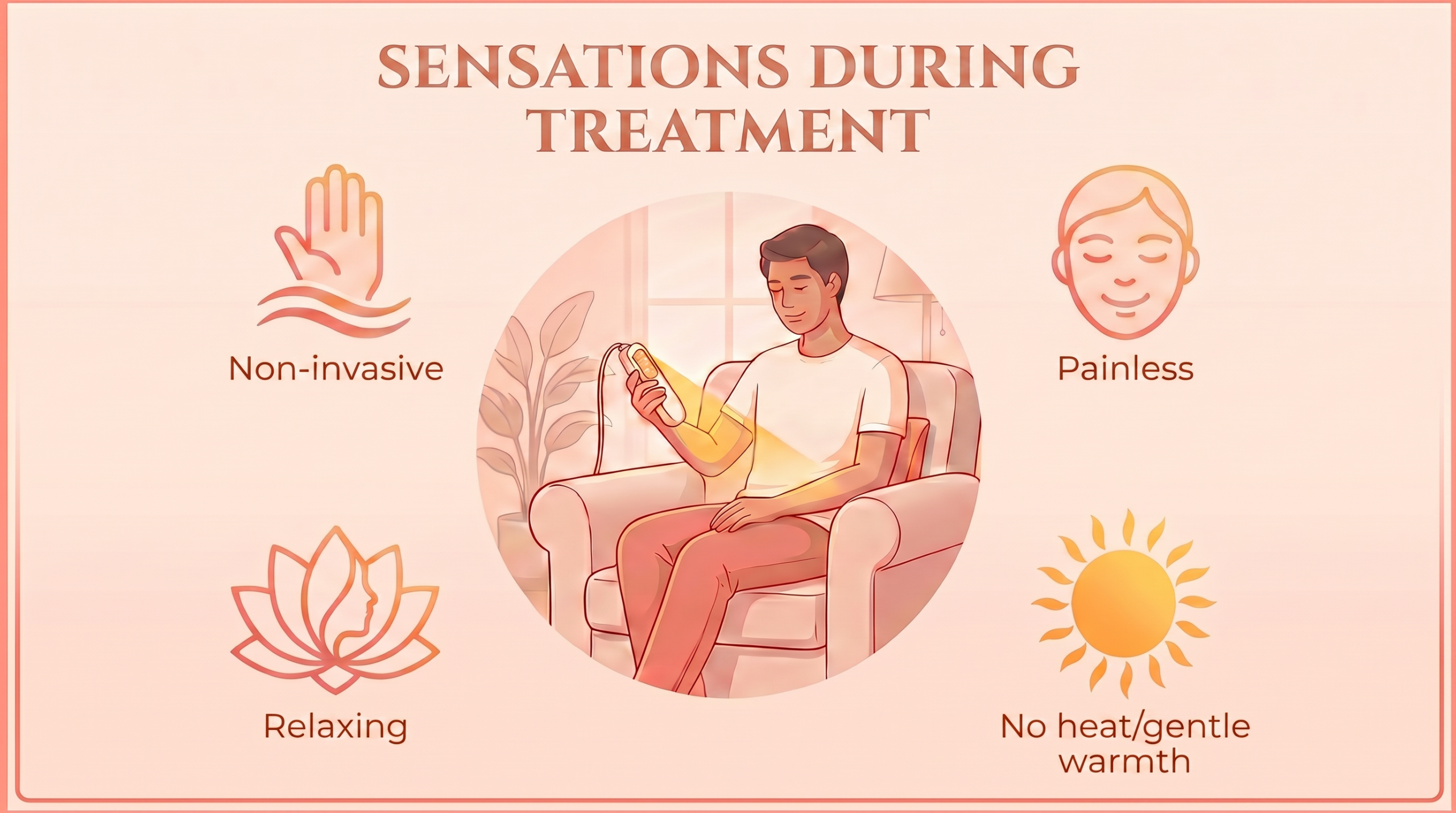
Photobiomodulation Therapy is non-invasive by nature. The light device is positioned close to, or in gentle contact with, the skin — with no intense heat, no vibrations and no discomfort. Its mechanism of action is photochemical, not thermal.
Some people describe a mild, pleasant sensation of warmth in the treated area, caused by a slight increase in blood flow. If you experience any discomfort at any point during the session, let your therapist know immediately.
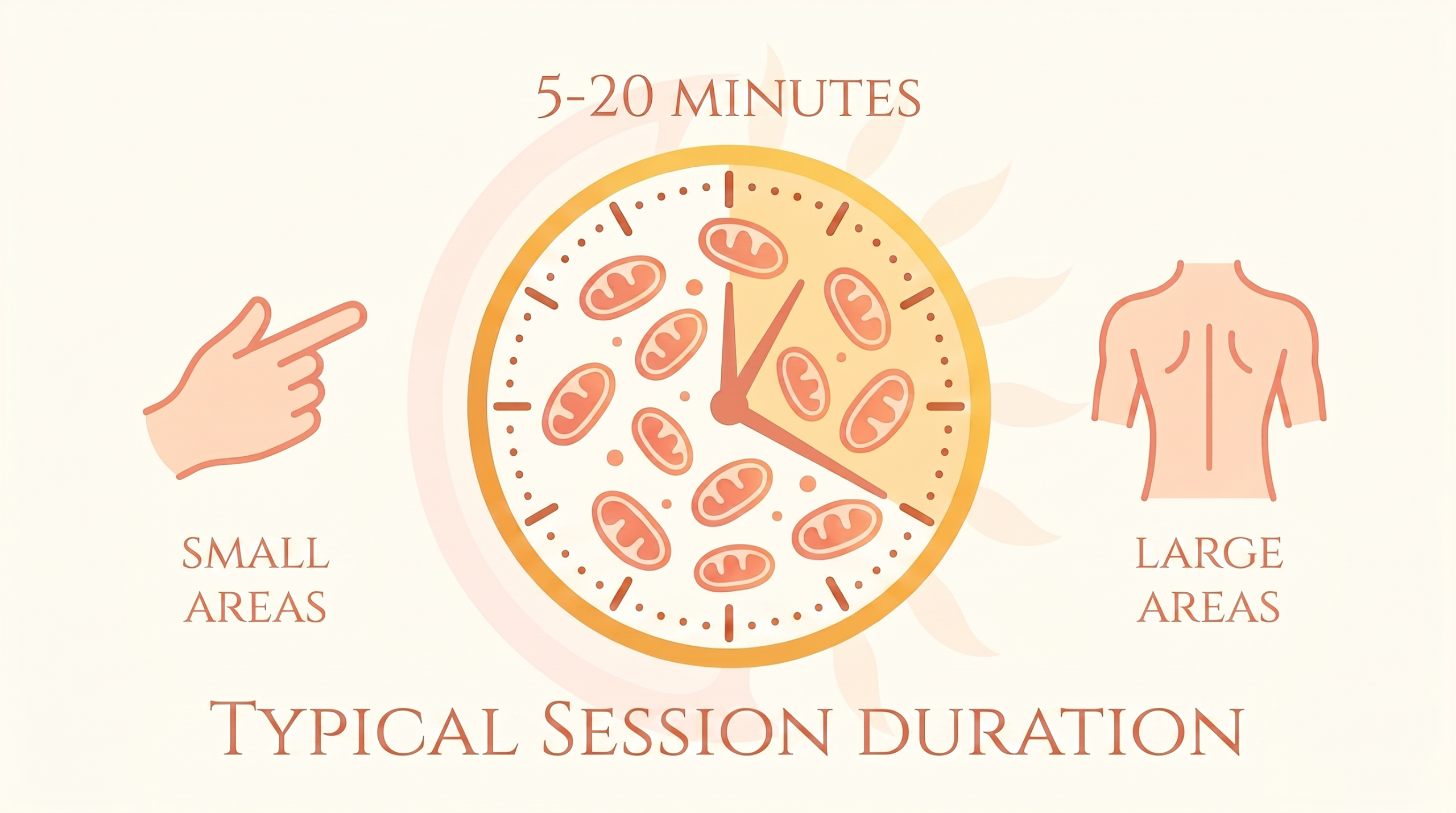
What does it feel like during a session?
Most people don't feel anything
It is perfectly normal not to feel anything during the session. Most people don’t.
Gentle, pleasant warmth
Some people notice a mild sensation of warmth in the treated area. This is a sign of increased blood flow, not tissue damage.
Never pain or burning
If you experience intense heat or pain, let your therapist know immediately. When applied correctly, PBMT should never be painful.
How often is PBMT carried out?
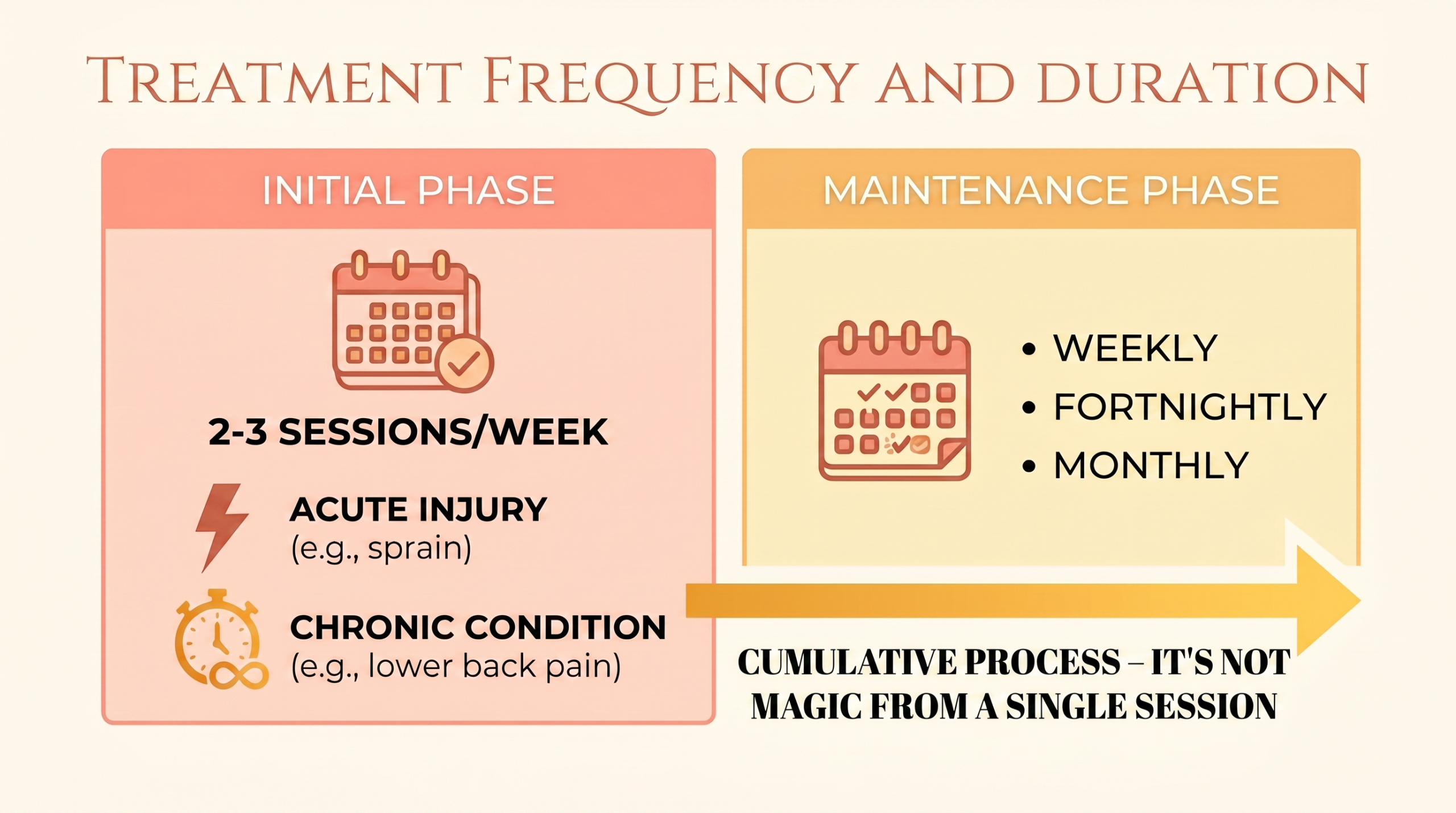
2–3 sessions per week during the first few weeks.
This initial period helps to "recharge" the cells and reduce inflammation effectively. Treatment is then followed by maintenance sessions.
Chronic conditions (persistent pain, rehabilitation, etc.)
Maintenance sessions every two weeks or once a month.
The frequency is gradually reduced according to your response to treatment. Your healthcare professional will always design a treatment plan tailored to your individual needs.
General safety profile
PBMT is non-invasive and is not associated with the side effects of many medications. It is generally very well tolerated. In a very small number of people, mild and temporary reactions may occur, such as slight redness or temporary sensitivity. Both usually resolve on their own within a few days.
Eye safety
Contraindications and precautions
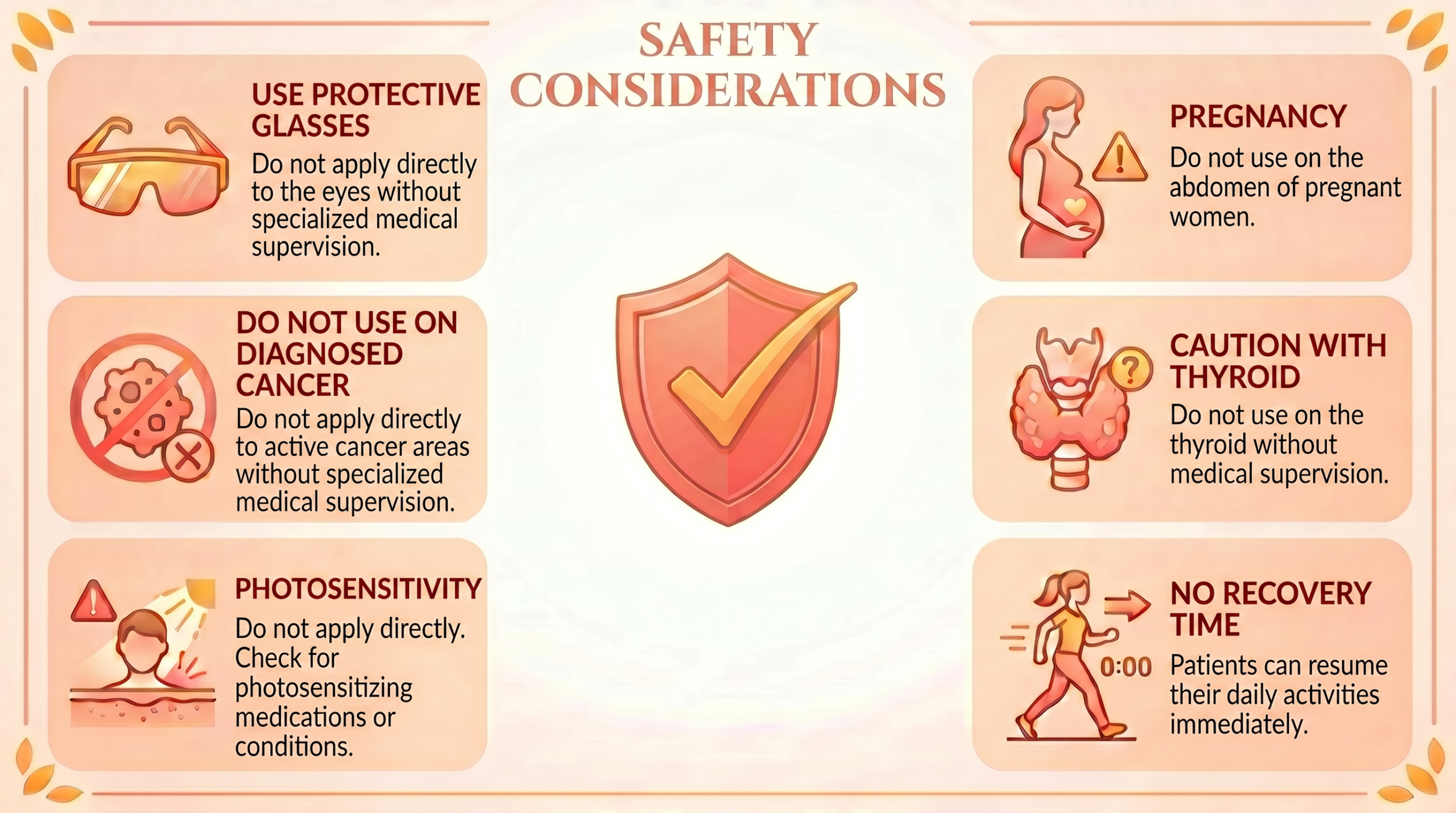
PBMT should not be applied over the abdomen during pregnancy, over areas with active malignant tumours, or over the thyroid unless under specialist medical supervision. Treatments involving the eyes should only be carried out under specialist medical supervision.
Photosensitivity and medication
PBMT should be used with caution in people with photosensitivity or those taking medications that increase skin sensitivity. Your healthcare professional will review your full medical history before treatment.
There is no recovery period or special aftercare required following a PBMT session. You can return to your normal activities immediately, including work, sport and showering.
Professional treatment in clinic or a home device?
The answer isn't black and white. It depends on your goals, your condition and your budget. The two options complement each other rather than compete.
- Individual assessment and tailored treatment protocol
- More powerful and versatile equipment
- Can be combined with physiotherapy, dentistry and other treatments
- Ideal for acute or complex conditions
From small handheld devices for joint pain to larger panels and helmets offering wider coverage. Their main advantage is convenience: you can use them whenever it suits you, without having to travel.
They are designed to be safe and easy to use, with pre-set treatment protocols. Their power output is lower than that of professional clinical devices.
- Complete convenience: at home, whenever it suits you
- Excellent for maintaining results
- Suitable for aesthetic care and mild pain
- A one-off investment for long-term use
1 COVER THE DEVICE WITH CLING FILM
Cover the device with a tightly stretched layer of cling film to maintain hygiene.
2 SWITCH ON THE DEVICE
Press and hold the white button (Start/Stop) for a few seconds to switch on the device.
3 SELECT THE TREATMENT MODE
Press the blue button (Mode) to select the treatment mode recommended by your healthcare professional.
4 START THE TREATMENT
Position the device over the area to be treated and briefly press the white button once to start the 5-minute treatment cycle. The treatment light will flash during the treatment.
5 USE THE DEVICE IN CONTACT WITH THE SKIN
The device should be placed directly on, or as close as possible to, the skin over the treatment area, with no clothing or other material covering the skin.
6 USE GENTLE CIRCULAR MOVEMENTS
Move the device gently in small circular motions for the recommended treatment time.
7 USE THE DEVICE CONSISTENTLY
Use the light consistently and regularly, following the instructions provided by your healthcare professional (for example, once or twice a day, according to your treatment plan).
8 WEAR PROTECTIVE GLASSES
Wear protective glasses when treating areas close to the eyes. Never look directly at the light.
9 SWITCH OFF THE DEVICE
Switch off the device by pressing and holding the white button (Start/Stop) for a few seconds.
Keep the device out of the reach of children.
10 REMOVE THE CLING FILM BEFORE STORING THE DEVICE
Once the recommended treatment time has finished, remove the cling film and store the device in its case.
11 CHARGE THE BATTERY
To charge the battery, simply connect the device to the mains power using the charging cable provided in the device case.
If you have a medical condition, the ideal approach is to begin with a professionally supervised treatment plan. Once your treatment goals have been achieved, a home device can help maintain the results. If your goal is general wellbeing or aesthetic care, a high-quality home device can be a very worthwhile investment from the outset.
What does the science really say?
PBMT is not a passing trend. It is a medical discipline supported by thousands of studies published in leading scientific journals and recognised by major health authorities.
Thousands
of studies have been published in leading scientific journals over several decades.
FDA
has authorised numerous PBMT devices for specific indications.
many PBMT devices carry CE marking in both Spain and across Europe.

Selected references
The references presented here represent a selection of the scientific evidence—including clinical trials, systematic reviews, meta-analyses, consensus statements and clinical practice guidelines—supporting the applications shown.
Examples of what the research shows
Oncology
Oral Mucositis in radiation therapy
A study published in Supportive Care in Cancer found that PBMT significantly reduced the incidence of severe oral mucositis in patients receiving radiotherapy for head and neck cancer, while also improving their quality of life during treatment.
Physiotherapy
Tendinopathies (such as tennis elbow)
Systematic reviews—which combine the findings of multiple high-quality studies—conclude that PBMT can reduce pain and improve function in people with tendinopathies, such as tennis elbow.
Dermatology
Acne
The available clinical evidence supports the use of PBMT to reduce inflammatory acne lesions and improve the appearance of the skin in people with mild to moderate acne.
Regulatory recognition
The FDA authorises devices for specific indications, not PBMT as a whole. It has authorised devices for the temporary relief of joint pain, the treatment of oral mucositis, and increasing blood flow.
These authorisations, based on rigorous assessment processes, support the safety and effectiveness of the technology for those specific indications. In Spain and across Europe, many devices also carry CE marking, demonstrating compliance with applicable safety and health requirements.
Limitations and contraindications
PBMT is not a magic wand. It requires a cumulative approach and will not always eliminate the problem completely but rather help manage and improve it. An incorrect treatment protocol can limit the results, which is why treatment by a qualified healthcare professional is so important.
Contraindications
PBMT should not be applied over the abdomen during pregnancy. It should also not be applied over areas with active malignant tumours or over the thyroid unless under specialist medical supervision. Treatments involving the eyes should only be carried out under specialist medical supervision.
PBMT should be used with caution in people with photosensitivity or those taking medications that increase skin sensitivity. If you have a pacemaker or implantable defibrillator, it is advisable to consult your cardiologist before treatment. Protective eyewear suitable for the wavelength being used should always be worn.
Taking the first step is simple
Whether you choose to see a healthcare professional or use a home device, here's a practical guide to help you get started safely.
How to find a qualified healthcare professional
1
Looking for the correct terminology
Look for clinics that specifically mention Photobiomodulation Therapy (PBMT). Don't rely on generic terms such as "light therapy" or "therapeutic laser", which can be imprecise.
2
Ask about specific training
A good healthcare professional will be happy to explain their training in PBMT, the devices they use (including the brands and power output), and their experience treating cases similar to yours.
3
Trust your usual healthcare professional
A physiotherapist, dentist or doctor who already knows your medical history and also offers PBMT can be an excellent choice. They combine an understanding of your individual needs with expertise in the technique.
4
In Madrid: Clínica Dental del Rey
If you're in Madrid, the team at Clínica Dental del Rey has experience in the dental and orofacial applications of PBMT. You can find out more at clinicadelrey.es
How to choose a home device
Define your goal first
Joint pain, skin care or hair health? Choose a device designed for your specific needs.
Check the technical specifications
A quality device should state, at a minimum, the wavelength (nm), the type of light source (laser or LED), the optical power output (mW), and the recommended treatment time.
Look for certifications
Choose established brands with CE marking in Europe. Read independent reviews and avoid brands that lack regulatory support.
Trust the evidence
Companies that invest in clinical research are more likely to develop effective devices. Look for brands that carry out or collaborate in clinical research programmes.
Plan your treatment
For chronic conditions, it may take several weeks or even months before you notice the results. Setting clear expectations with your healthcare professional will help you stay motivated.
Schedule your sessions just as you would any other appointment: "Tuesday and Friday after waking up" or "after exercise". A regular routine is the key to consistency.
A pain score from 1 to 10, or a weekly photograph for aesthetic treatments, can help you track your progress objectively and adjust your treatment plan if needed.
Reliable resources to learn more
WALT and the PBM Foundation
These organisations provide articles, research updates and educational resources on PBMT for both healthcare professionals and the general public.
PubMed and Google Scholar
Search for "photobiomodulation" followed by your condition (for example, "photobiomodulation knee pain") to access the scientific evidence directly.
Patient forums and support groups
Reading about other people's experiences can be helpful, particularly in groups focused on your condition. Keep an open mind but always think critically and compare personal experiences with the available scientific evidence.