Welcome to the Marisol Light Project blog!!
I’m Dr Nicola Vilaplana, and as you already know, in my day-to-day work at Clínica Dental del Rey, I use Photobiomodulation Therapy (PBMT) to reduce inflammation, relieve pain and support the regeneration of oral tissues.
However, the potential of light doesn’t stop at the mouth. Today, I’d like to open the doors to a fascinating new frontier in medicine: neurology and mental health.
A groundbreaking pilot clinical study has recently been published. The PHOTORED study, led by Dr Monteiro and published in the scientific journal of Photobiomodulation, Photomedicine, and Laser Surgery (pp. 1–2),, explores how infrared light could offer hope to people living with Treatment-Resistant Depression (TRD) (p. 1).
What Is Treatment-Resistant Depression?
Unfortunately, major depression affects millions of people worldwide (p. 1). What many people don’t realise is that approximately one in three people do not improve with conventional antidepressants (p. 1). When a patient has tried at least two different medications without achieving sufficient improvement, their depression may be classified as Treatment-Resistant Depression (TRD) (pp. 1–2).
These individuals are often left searching for more advanced treatment options, such as magnetic stimulation or ketamine-based treatments (p. 1), which can often be difficult to access or afford (pp. 1–2). This is where light comes into the picture.
How Can Light Reach the Brain? (Transcranial Photobiomodulation)
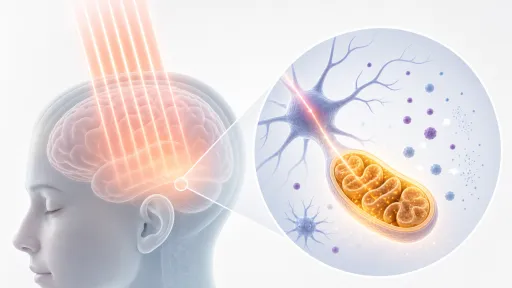
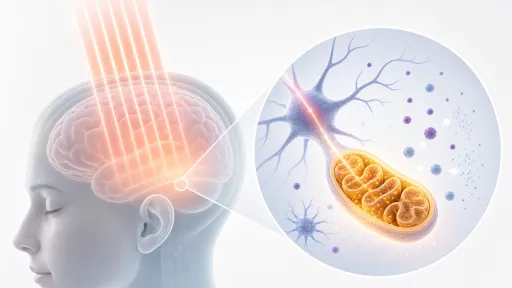
Just as we apply light to the gums to support tissue healing, scientists have discovered that certain specific wavelengths of infrared light can safely penetrate the scalp and skull (p. 2). This is known as transcranial photobiomodulation (tPBM) (p. 1).
When brain cells receive these photons of light, a kind of cellular energy boost occurs (p. 2):
- More cellular energy: The mitochondria, the energy-producing centres of our cells, are stimulated to produce more ATP (p. 2).
- Less inflammation: Neuroinflammation and cellular oxidative stress are reduced (p. 2).
- Improved connectivity: Unlike earlier helmets, which targeted a single area of the brain, current technology uses multi-LED helmets to stimulate the brain more broadly, supporting the neural circuits involved in mood regulation (pp. 2, 4).
The Study Results: Does It Really Work?
This new clinical trial evaluated patients with moderate to severe depressive symptoms (p. 1). Participants wore an infrared light helmet emitting 810-nanometre light for 20 minutes, three times a week, for one month — 12 sessions in total (pp. 1–2).
The results reported by the researchers are particularly encouraging (p. 1):
- Reduction in severity: Depression scores assessed by clinicians decreased substantially (p. 1).
- 40.9% clinical response: Almost half of the patients who completed the treatment experienced a reduction in their symptoms of at least 50% (pp. 1, 3).
- Perceived improvement: 81.8% of participants reported feeling “better”, “much better” or “very much improved” according to the Clinical Global Impression scale (pp. 3, 6).
Is the Treatment Safe?
As a healthcare professional, this is what I find particularly encouraging: the treatment was shown to be very safe and well tolerated (pp. 1, 4).
- No serious adverse effects were reported (pp. 1, 3).
- Around 63% of patients experienced some form of mild side effect. The most common were temporary headaches (50%) and mild scalp discomfort (22.7%) (pp. 1, 3–4). These effects are understandable and may be related to the physical pressure of the helmet and increased blood flow associated with the treatment (p. 4). They also resolved on their own (p. 4).
The Future of the Marisol Light Project
Although this was a pilot study and larger controlled trials are still needed to establish and standardise the optimal treatment parameters (pp. 1, 5), it provides further evidence that photobiomodulation is not simply a therapy of the future: it is already becoming part of the medical reality of today.
Light helps us support healthier smiles in the dental clinic, and in the future, it may also become an important tool for helping people affected by severe depression.
Has the potential of photobiomodulation surprised you? Leave your questions in the comments, and let’s continue exploring the science of light together.
Health Information and Medical Disclaimer
The Marisol Light Project is intended solely to provide educational and scientific information based on indexed medical literature (pp. 1–2). Transcranial photobiomodulation for mood disorders is still undergoing clinical evaluation (pp. 1, 5) and should never replace psychiatric or pharmacological treatment prescribed by a qualified mental health professional (p. 2). If you are experiencing symptoms of depression, always consult a qualified medical professional (p. 2).
Scientific Reference Carreiro Monteiro D, de Oliveira EK, Silva Ramos C, de Moura Germoglio C, Alves da Silva EC, Paula RR, et al. PHOTObiomodulation for REsistant Depression Study: An Open-Label Pilot Trial on Transcranial Photobiomodulation for Treatment-Resistant Depression. Photobiomodulation Photomed Laser Surg. 2026;44(7):448-455. doi:10.1177/25785478261456433 (p. 1).